Archive for the ‘Uncategorized’ Category

Dow Jones: Small business coalition opposes plan they say rewards U.S. multinationals

Wednesday, October 26th, 2011

Business Groups Back Proposal To Lower Taxes On Foreign Earnings

- Business groups largely back Rep. Dave Camp’s proposal to change the taxation of foreign profits

- Companies support lower corporate tax rate, switch to territorial system

- Small business coalition opposes plan they say rewards U.S. multinationals

By Kristina Peterson
Dow Jones Newswires, Oct 26, 2011

WASHINGTON -(Dow Jones)- Business coalitions quickly lined up behind a proposal from House Ways and Means Committee Chairman Dave Camp (R., Mich.) released Wednesday to lower the top individual and corporate tax rates and reduce the taxes on profits earned overseas.

A coalition of companies including AT&T Inc. (T), Boeing Co. (BA), Verizon Communications Inc. (VZ) and Intel Corp. (INTC) praised Camp’s proposal to lower the top individual and corporate tax rates to 25% from 35% and reduce the taxes companies pay on foreign earnings.

“A substantial reduction in the corporate tax rate, as Chairman Camp outlines in his plan, serves as a catalyst for job creation, economic growth and the boosting of U.S. competitiveness in the global market,” the co-chairs of the Reducing America’s Taxes Equitably Coalition said in a statement Wednesday afternoon. Other members of the coalition include FedEx Corp. (FDX), United Parcel Service Inc. (UPS), Altria Group Inc. (MO) and Walt Disney Co. (DIS).

In a “discussion draft” released Wednesday, Camp proposed switching to a territorial system in which companies would not pay taxes on 95% of their foreign earnings, but would not be able to indefinitely defer paying taxes on overseas income. The changes would be designed to bring in the same amount of revenue as the current system, Camp told reporters Wednesday.

Under the current worldwide system, U.S.-based companies can leave money abroad if it is reinvested overseas, but must pay U.S. taxes of up to 35% when bringing those funds back home.

As part of the transition to a territorial system, Camp proposed a 5.25% tax on all foreign earnings currently held overseas, regardless of whether companies bring them back to the United States or not, over eight years.

Karen Olick, campaign manager for the WIN America coalition, said in a statement that Camp’s proposal reflects building momentum for a tax break on bringing back overseas earnings.

“We look forward to closely reviewing his plan, but this clearly shows that support for bringing global earnings home continues to grow,” Olick said. The coalition, which has advocated for a repatriation tax holiday, includes among its members Apple Inc. (AAPL), Google Inc. (GOOG), Microsoft Corp. (MSFT) and Pfizer Inc. (PFE).

Camp said he did not think his repatriation proposal was at “cross-purposes” with other legislation already introduced to establish a one-time tax break on overseas earnings.

“I do believe we need a long-term fix” to address the taxation of overseas profits, he said, adding “otherwise you come back to it again.”

Camp’s proposal did meet resistance from one coalition of mostly small business owners, Business for Shared Prosperity, who said it would reward large corporations at the expense of other businesses.

“Mr. Camp’s proposal rewards those U.S. multinational corporations which have successfully gamed the tax system by disguising their U.S. profits as foreign earnings,” the group’s tax policy director, Scott Klinger, said in a statement. Most small-business owners already pay a 25% corporate rate and would not benefit from lowering the rate, he noted.

-By Kristina Peterson, Dow Jones Newswires; 347-882-7215; kristina.peterson@ dowjones.com

Copyright (c) 2011 Dow Jones & Company, Inc.

http://www.nasdaq.com/aspx/stock-market-news-story.aspx?storyid=20111026…

Action Alert- Call Congress: No Big Biz Tax Holiday

Friday, October 14th, 2011

Companies like Google, Pfizer, Cisco and others in the “Win America” coalition are storming Capitol Hill with more than 160 lobbyists so they can save billions in taxes “repatriating” profits they’ve stashed offshore – and stick Main Street businesses with the bill.

Lawmakers need to hear from you now as corporate lobbyists try to pull off a bait and switch – with an infrastructure bank as the bait to hook members of Congress who know the tax holiday is a bad idea. In this crazy math, a tax holiday that the congressional Joint Committee on Taxation says will cost the U.S. Treasury $42 billion to $79 billion is supposed to help pay for an infrastructure bank. It makes no sense.

If Congress wants to link the infrastructure bank to taxes, here’s a great way to do it: pass the Stop Tax Haven Abuse Act. That would put $100 billion a year into the U.S. Treasury that is now being lost to tax dodging through tax havens. That would mean real money for infrastructure and other job-creating national priorities.

Please tell your Senators and Representative not to reward Big Business tax avoiders with another tax holiday:

  • It’s a tax giveaway that only 1% of American businesses could get – leaving the other 99% holding the bag.
  • It would reward companies that shift profits to offshore subsidiaries to avoid taxes and encourage them to move even more profits to tax havens in anticipation of the next tax holiday.
  • It would repeat a failed policy. Companies didn’t create the jobs or investment they promised for a similar “one-time” tax holiday in 2004 – layoffs actually increased. New tax holiday job provisions would be easy to circumvent.
  • It would tilt the playing field even further against small businesses rooted in America.

In the words of Dean Cycon, CEO of Dean’s Beans coffee company, “We can’t afford the waste of another massive corporate tax break that rewards those who have made an art form of avoiding their tax responsibility through tax havens and other accounting manipulation.”

(Scroll down for more information about the overseas tax holiday.)

Reach your members of Congress through the congressional switchboard: (202) 224-3121.

Identify yourself as a business owner and a constituent.

Please urge your members of Congress to oppose the tax holiday for “repatriated” big business profits, whether it’s linked to an infrastructure bank or not. The current tax holiday bills are Hagan-McCain Senate bill S1671 and Brady House bill HR 1834.

Please urge lawmakers to instead support the Stop Tax Haven Abuse Act – Senate bill S1346 and House bill HR 2669.

Please copy this into an email to forward to friends and business associates and ask them to call their Senators and Representatives.

Please sign these petitions if you have not already done so. THANKS!

For more information and to get more involved in corporate tax reform, please contact BobKeener@businessforsharedprosperity.org or visit Business for Shared Prosperity.

MORE INFORMATION

As Frank Knapp, President and CEO of the South Carolina Chamber of Commerce, said, “If the U.S. multinationals lobbying for another big tax giveaway wanted to create jobs, they’d be doing it right now. They’re sitting on big profits and cash hordes. Don’t fall for the smoke and mirrors. We shouldn’t be rewarding – again – the companies who keep offshoring profits and jobs. It’s a slap in the face to the 5,000 members of the South Carolina Small Business Chamber of Commerce and Main Street businesses all across this country who are the backbone of jobs and investment in America.”

Holiday Could Not “Pay for” Infrastructure Bank — or Anything Else

The proposal for linking a repatriation tax holiday with an infrastructure bank implies that the bank would be funded by proceeds from the holiday. But the holiday would lose tax dollars, not raise them. As economist Edward Kleinbard recently said, “You’re starting $80 billion in the hole with repatriation . . . so there’s no net money to go into an infrastructure bank or anywhere else.” In fact, a holiday would add to budget deficits and put even more budget pressure on infrastructure investments – or any investments for Main Street. (See report by Center on Budget and Policy Priorities.)

Hagan-McCain Pretends to Be Jobs-focused

In the latest result of lobbying by the coalition of offshore tax-avoiders, Senator Kay Hagan (D-NC) and Senator John McCain (R-AZ) have announced a proposal for a tax holiday that pretends to be more jobs-focused than previous proposals, because it offers separate rates for those that supposedly create jobs, versus those that don’t. Tax Holiday advocates fooled Congress before, and count on Congress being fooled again.

Lobbying Exposed and Failure of 2004 Holiday Detailed

Amazingly, the announcement came less than a week after Bloomberg exposed the enormous lobbying effort behind the tax holiday push and two days after the Institute for Policy Studies published a report showing the widespread layoffs by recipients of the previous tax holiday in 2004.

On October 11, Senator Carl Levin, chairman of the Senate Permanent Subcommittee on Investigations, released a new study confirming again that a similar 2004 “one-time” tax holiday did not increase jobs or spur domestic investment as promised. Instead, it was followed increased CEO pay, stock buybacks and stockpiling even more money offshore. Since 2004, the amount of earnings by U.S. corporations held offshore has more than tripled. Another tax holiday would open the floodgates even wider.

Background materials:

Letter from Business and Investors Against Tax Haven Abuse to Congress about the original Win America proposal.

Expose of lobbying connections to U.S. legislators by Bloomberg, 9/29/11.

Report by Senator Carl Levin on 2004 tax holiday, 10/11/11.

Report on Layoffs after the 2004 holiday by IPS, 10/4/11 (PDF)

Report on Impact of New Tax Holiday by CBPP, 10/13/11

Call Congress on June 7

Monday, June 6th, 2011

Join our National Call-In Day on June 7 to send Congress a message that tax havens are bad for business.

A coalition of multinational corporations is pushing for a massive tax holiday on profits they have parked overseas. We need to act now to stop a multinational corporate tax windfall of $80 billion.

Taxes are front and center in the budget and deficit debates.  As usual, the big business lobbies are out in force, urging Congress to cut budgets and keep tax increases “off the table.”

But as you know, we could capture $100 billion per year in federal tax revenue if we closed the overseas tax haven loopholes. That’s $100 billion that could be invested in public services and infrastructure that underpin a healthy economy. These are investments that would contribute to both U.S. business competitiveness and job creation.

Later in June, we expect the new version of the “Stop Tax Haven Abuse Act” to be introduced in Congress, so it’s critical that we show strong business support now.

Follow the link to call Congress toll-free. Your voice as a business person or investor makes a big difference.

Want to do more?

The good news is that public anger against corporate tax dodging is growing. With your help, we can put more pressure on Congress and the President to address the budget responsibly, by closing loopholes and leveling the taxes playing field for all businesses.

POLICY BRIEF: The Business Case Against Aggressive Offshore Tax Avoidance

Wednesday, April 13th, 2011

Posted April 13, 2011


KEY POINTS:


Corporate tax dodgers create an unlevel playing field with domestic U.S. businesses. Responsible businesses have to compete unfairly against multinational companies that use offshore tax havens. A domestic U.S. business that pays its taxes is at an unfair disadvantage when multi-national corporations game the system and shift profits to low or no tax havens.


Corporate tax dodging shifts bills onto responsible tax payers. The bills have to be paid –and no one should be able to opt out simply because they are politically connected and big. It undermines our system of government when some corporations pay little – or nothing – toward the range of public goods that includes roads, shelters, and schools.


We all must pay our fair share to maintain the public infrastructure for healthy business activity. Businesses thrive in healthy communities with adequate public services and infrastructure.  All companies should pay their fair share of taxes for infrastructure, public services and the investments that have historically expanded opportunity in the US, including K-12 and higher education.


Our businesses and communities will be hurt by tax cut austerity at local, state and federal level. States are facing the worst budget gaps in living memory. The Center on Budget and Policy Priorities estimates that the combined budget gaps in all U.S. states is over $102 billion.[i] Closing overseas tax havens would generate an estimated $100 billion that could be used to reduce the worst of these cuts.

In the last 50 years, the gap between what corporations pay and the taxes paid by small businesses and individuals continues to widen. In 1961, small business owners and individuals paid twice as much in federal income taxes as large corporations. In 2011, small business owners and individuals are paying nearly five times in taxes what corporations pay.  Between 1961 and 2011, taxes paid by small business owners and individuals rose 23-fold from $41 billion in 1961 to an expected $956 million in 2011.[ii] Over the same time period, large corporations saw their tax bill rise less than 10-fold, from $21 billion in 1961 to $198 billion expected in 2011.

Secrecy undermines healthy business environments. Tax havens are not only ways to reduce or eliminate taxes, but also a means for criminals and lawless corporations to circumvent the law, using secrecy as their primary tool. This is why the Tax Justice Network prefers to refer to tax havens as “secrecy jurisdictions.”


POLICY REMEDIES

No Corporate Tax Holiday for Offshore Profits.  Multinational technology and drug companies are lobbying Congress to allow them to repatriate $1.2 trillion in profits they have parked offshore.  They would like to pay 5.25 percent taxes on these profits, rather than the statutory rates.

Pass the “Stop Tax Haven Abuse” Act. This would address a variety of abuses (about to be reintroduced in the 112th Congress) and could raise $100 billion in revenue a year.

Ending Deferred Corporate Income Taxes. This would reduce the incentive for corporations to use tax havens and move jobs offshore. According to Citizens for Tax Justice, ending corporate tax deferral would raise at least $50 billion per year.[iii]


Country by Country Reporting.  Require global corporations to report sales made, profits earned and taxes paid in every jurisdiction where an entity operates.

Automatic Exchange of Tax Data through international tax cooperation among governments.  Require governments to collect data from financial institutions on income, gains, and property paid to non-resident individuals, corporations and trusts. Mandate that data collected automatically be provided to the governments where nonresident entity is located.

Require Disclosure of Beneficial Ownership of all business entities, trusts, foundations and charities.  Require this information be readily available on public record to facilitate effective due diligence; and explicitly require, and enforce, that financial institutions identify the ultimate beneficial owners or controllers of any company, trust or foundation seeking to open an account.


EXAMPLES OF AGGRESSIVE TAX AVOIDANCE

BOEING CORPORATION.  Over the three year period from 2008 to 2010, Boeing Corporation had total pre-tax profits of $9.7 billion but did not pay a dime of its profits in federal taxes. Boeing Corporation has 38 subsidiaries in foreign tax haven jurisdictions.[iv] At the end of February 2011, the U.S. government granted Boeing a contract worth $35 billion to build airplanes.[v]

GENERAL ELECTRIC: Between 2006 and 2010, General Electric told their shareholders they had $26.3 billion in profits, but paid no U.S. taxes.  In fact, they got $4.2 billion in rebates, so their effective U.S. tax rate was negative 15.8 percent.[vi] In 2010, they reported $5.07 billion in domestic pre-tax profits and paid just $4 million in taxes.  Their unpatriated taxes grew to $94 billon. GE has subsidiaries in tax havens including 3 each in Bermuda and Singapore and 1 in Luxembourg.

CITIGROUP: Citigroup has paid no taxes for the last four years. They were the largest recipient of federal bank bailout funds, receiving $476 billion. Citigroup has subsidiaries in tax havens including 90 in Cayman Islands, 91 in Luxemburg, 35 in British Virgin Islands, and 40 in Hong Kong.

PFIZER: Many multinational pharmaceutical companies shift their intellectual property and patents to offshore subsidiaries.  They then shift profits around –paying their subsidiaries through a process called “transfer pricing.”  Pfizer maintains 80 subsidiaries in tax havens, including 28 in Ireland, 16 in Luxembourg, 10 on the island of Jersey.

RESOURCES


Business & Investors Against Tax Haven Abuse: “Unfair Advantage: The Business Case Against Tax Havens,” (July 2010)  http://businessagainsttaxhavens.org/wp-content/uploads/2010/07/TaxHaven.pdf

Government Accountability Office: Large U.S. Corporations and Federal Contractors with Subsidiaries in Jurisdictions Listed as Tax Havens or Financial Privacy Jurisdictions (December 2008) http://www.gao.gov/new.items/d09157.pdf

Permanent Subcommittee on Investigations, Staff Report on Tax Haven Banks and U.S. Tax Compliance, July 17, 2008.


Sources & Notes


[i]Center on Budget and Policy Priorities, Governors’ 2011 Budgets propose New Route of Cuts, January 28, 2011.

[ii] The vast majority of small business owners, sole proprietors, and partnerships are registered as S Corporations, where their earnings are reported as income on their owners’ individual tax returns. They pay taxes according to tax schedules for individuals.

[iii] Citizens for Tax Justice, “Congress Should End ‘Deferral’ Rather than Adopt a ‘Territorial’ Tax System,” March 23, 2011.

http://www.ctj.org/pdf/internationalcorptax2011.pdf

[iv] Information about number of tax havens comes from the Government Accountability Office’s report, “International Taxation: Large U.S. Corporations and Federal Contractors with Subsidiaries in Jurisdictions Listed as Tax Havens or Financial Privacy Jurisdictions,” December 2008. GAO-9-157.

[v] SOURCE: Citizens for Tax Justice, “Boeing’s Reward for Paying No Federal Taxes Over the Last Three Years?  A $35 Billion Federal Contract,” http://www.ctj.org/pdf/boeing0211.pdf

[vi] Congressional Testimony by Robert McIntyre, March 9, 2011. http://ctj.org/ctjreports/2011/03/ctj_director_robert_mcintyres_testimony_on_business_tax_subsidies.php

NYT: G.E.’s Strategies Let it Avoid Taxes Altogether

Wednesday, March 30th, 2011

The New York Times

March 24, 2011

By DAVID KOCIENIEWSKI

General Electric, the nation’s largest corporation, had a very good year in 2010.

The company reported worldwide profits of $14.2 billion, and said $5.1 billion of the total came from its operations in the United States.

Its American tax bill? None. In fact, G.E. claimed a tax benefit of $3.2 billion.

That may be hard to fathom for the millions of American business owners and households now preparing their own returns, but low taxes are nothing new for G.E. The company has been cutting the percentage of its American profits paid to the Internal Revenue Service for years, resulting in a far lower rate than at most multinational companies.

Its extraordinary success is based on an aggressive strategy that mixes fierce lobbying for tax breaks and innovative accounting that enables it to concentrate its profits offshore. G.E.’s giant tax department, led by a bow-tied former Treasury official named John Samuels, is often referred to as the world’s best tax law firm. Indeed, the company’s slogan “Imagination at Work” fits this department well. The team includes former officials not just from the Treasury, but also from the I.R.S. and virtually all the tax-writing committees in Congress.

While General Electric is one of the most skilled at reducing its tax burden, many other companies have become better at this as well. Although the top corporate tax rate in the United States is 35 percent, one of the highest in the world, companies have been increasingly using a maze of shelters, tax credits and subsidies to pay far less.

In a regulatory filing just a week before the Japanese disaster put a spotlight on the company’s nuclear reactor business, G.E. reported that its tax burden was 7.4 percent of its American profits, about a third of the average reported by other American multinationals. Even those figures are overstated, because they include taxes that will be paid only if the company brings its overseas profits back to the United States. With those profits still offshore, G.E. is effectively getting money back.

Such strategies, as well as changes in tax laws that encouraged some businesses and professionals to file as individuals, have pushed down the corporate share of the nation’s tax receipts — from 30 percent of all federal revenue in the mid-1950s to 6.6 percent in 2009.

Yet many companies say the current level is so high it hobbles them in competing with foreign rivals. Even as the government faces a mounting budget deficit, the talk in Washington is about lower rates. President Obama has said he is considering an overhaul of the corporate tax system, with an eye to lowering the top rate, ending some tax subsidies and loopholes and generating the same amount of revenue. He has designated G.E.’s chief executive, Jeffrey R. Immelt, as his liaison to the business community and as the chairman of the President’s Council on Jobs and Competitiveness, and it is expected to discuss corporate taxes.

“He understands what it takes for America to compete in the global economy,” Mr. Obama said of Mr. Immelt, on his appointment in January, after touring a G.E. factory in upstate New York that makes turbines and generators for sale around the world.

A review of company filings and Congressional records shows that one of the most striking advantages of General Electric is its ability to lobby for, win and take advantage of tax breaks.

Over the last decade, G.E. has spent tens of millions of dollars to push for changes in tax law, from more generous depreciation schedules on jet engines to “green energy” credits for its wind turbines. But the most lucrative of these measures allows G.E. to operate a vast leasing and lending business abroad with profits that face little foreign taxes and no American taxes as long as the money remains overseas.

Company officials say that these measures are necessary for G.E. to compete against global rivals and that they are acting as responsible citizens. “G.E. is committed to acting with integrity in relation to our tax obligations,” said Anne Eisele, a spokeswoman. “We are committed to complying with tax rules and paying all legally obliged taxes. At the same time, we have a responsibility to our shareholders to legally minimize our costs.”

The assortment of tax breaks G.E. has won in Washington has provided a significant short-term gain for the company’s executives and shareholders. While the financial crisis led G.E. to post a loss in the United States in 2009, regulatory filings show that in the last five years, G.E. has accumulated $26 billion in American profits, and received a net tax benefit from the I.R.S. of $4.1 billion.

But critics say the use of so many shelters amounts to corporate welfare, allowing G.E. not just to avoid taxes on profitable overseas lending but also to amass tax credits and write-offs that can be used to reduce taxes on billions of dollars of profit from domestic manufacturing. They say that the assertive tax avoidance of multinationals like G.E. not only shortchanges the Treasury, but also harms the economy by discouraging investment and hiring in the United States.

“In a rational system, a corporation’s tax department would be there to make sure a company complied with the law,” said Len Burman, a former Treasury official who now is a scholar at the nonpartisan Tax Policy Center. “But in our system, there are corporations that view their tax departments as a profit center, and the effects on public policy can be negative.”

The shelters are so crucial to G.E.’s bottom line that when Congress threatened to let the most lucrative one expire in 2008, the company came out in full force. G.E. officials worked with dozens of financial companies to send letters to Congress and hired a bevy of outside lobbyists.

The head of its tax team, Mr. Samuels, met with Representative Charles B. Rangel, then chairman of the Ways and Means Committee, which would decide the fate of the tax break. As he sat with the committee’s staff members outside Mr. Rangel’s office, Mr. Samuels dropped to his knee and pretended to beg for the provision to be extended — a flourish made in jest, he said through a spokeswoman.

That day, Mr. Rangel reversed his opposition to the tax break, according to other Democrats on the committee.

The following month, Mr. Rangel and Mr. Immelt stood together at St. Nicholas Park in Harlem as G.E. announced that its foundation had awarded $30 million to New York City schools, including $11 million to benefit various schools in Mr. Rangel’s district. Joel I. Klein, then the schools chancellor, and Mayor Michael R. Bloomberg, who presided, said it was the largest gift ever to the city’s schools.

G.E. officials say the donation was granted solely on the merit of the project. “The foundation goes to great lengths to ensure grant decisions are not influenced by company government relations or lobbying priorities,” Ms. Eisele said.

Mr. Rangel, who was censured by Congress last year for soliciting donations from corporations and executives with business before his committee, said this month that the donation was unrelated to his official actions.

Defying Reagan’s Legacy

General Electric has been a household name for generations, with light bulbs, electric fans, refrigerators and other appliances in millions of American homes. But today the consumer appliance division accounts for less than 6 percent of revenue, while lending accounts for more than 30 percent. Industrial, commercial and medical equipment like power plant turbines and jet engines account for about 50 percent. Its industrial work includes everything from wind farms to nuclear energy projects like the troubled plant in Japan, built in the 1970s.

Because its lending division, GE Capital, has provided more than half of the company’s profit in some recent years, many Wall Street analysts view G.E. not as a manufacturer but as an unregulated lender that also makes dishwashers and M.R.I. machines.

As it has evolved, the company has used, and in some cases pioneered, aggressive strategies to lower its tax bill. In the mid-1980s, President Ronald Reagan overhauled the tax system after learning that G.E. — a company for which he had once worked as a commercial pitchman — was among dozens of corporations that had used accounting gamesmanship to avoid paying any taxes.

“I didn’t realize things had gotten that far out of line,” Mr. Reagan told the Treasury secretary, Donald T. Regan, according to Mr. Regan’s 1988 memoir. The president supported a change that closed loopholes and required G.E. to pay a far higher effective rate, up to 32.5 percent.

That pendulum began to swing back in the late 1990s. G.E. and other financial services firms won a change in tax law that would allow multinationals to avoid taxes on some kinds of banking and insurance income. The change meant that if G.E. financed the sale of a jet engine or generator in Ireland, for example, the company would no longer have to pay American tax on the interest income as long as the profits remained offshore.

Known as active financing, the tax break proved to be beneficial for investment banks, brokerage firms, auto and farm equipment companies, and lenders like GE Capital. This tax break allowed G.E. to avoid taxes on lending income from abroad, and permitted the company to amass tax credits, write-offs and depreciation. Those benefits are then used to offset taxes on its American manufacturing profits.

G.E. subsequently ramped up its lending business.

As the company expanded abroad, the portion of its profits booked in low-tax countries such as Ireland and Singapore grew far faster. From 1996 through 1998, its profits and revenue in the United States were in sync — 73 percent of the company’s total. Over the last three years, though, 46 percent of the company’s revenue was in the United States, but just 18 percent of its profits.

Martin A. Sullivan, a tax economist for the trade publication Tax Analysts, said that booking such a large percentage of its profits in low-tax countries has “allowed G.E. to bring its U.S. effective tax rate to rock-bottom levels.”

G.E. officials say the disparity between American revenue and American profit is the result of ordinary business factors, such as investment in overseas markets and heavy lending losses in the United States recently. The company also says the nation’s workers benefit when G.E. profits overseas.

“We believe that winning in markets outside the United States increases U.S. exports and jobs,” Mr. Samuels said through a spokeswoman. “If U.S. companies aren’t competitive outside of their home market, it will mean fewer, not more, jobs in the United States, as the business will go to a non-U.S. competitor.”

The company does not specify how much of its global tax savings derive from active financing, but called it “significant” in its annual report. Stock analysts estimate the tax benefit to G.E. to be hundreds of millions of dollars a year.

“Cracking down on offshore profit-shifting by financial companies like G.E. was one of the important achievements of President Reagan’s 1986 Tax Reform Act,” said Robert S. McIntyre, director of the liberal group Citizens for Tax Justice, who played a key role in those changes. “The fact that Congress was snookered into undermining that reform at the behest of companies like G.E. is an insult not just to Reagan, but to all the ordinary American taxpayers who have to foot the bill for G.E.’s rampant tax sheltering.”

A Full-Court Press

Minimizing taxes is so important at G.E. that Mr. Samuels has placed tax strategists in decision-making positions in many major manufacturing facilities and businesses around the globe. Mr. Samuels, a graduate of Vanderbilt University and the University of Chicago Law School, declined to be interviewed for this article. Company officials acknowledged that the tax department had expanded since he joined the company in 1988, and said it now had 975 employees.

At a tax symposium in 2007, a G.E. tax official said the department’s “mission statement” consisted of 19 rules and urged employees to divide their time evenly between ensuring compliance with the law and “looking to exploit opportunities to reduce tax.”

Transforming the most creative strategies of the tax team into law is another extensive operation. G.E. spends heavily on lobbying: more than $200 million over the last decade, according to the Center for Responsive Politics. Records filed with election officials show a significant portion of that money was devoted to tax legislation. G.E. has even turned setbacks into successes with Congressional help. After the World Trade Organization forced the United States to halt $5 billion a year in export subsidies to G.E. and other manufacturers, the company’s lawyers and lobbyists became deeply involved in rewriting a portion of the corporate tax code, according to news reports after the 2002 decision and a Congressional staff member.

By the time the measure — the American Jobs Creation Act — was signed into law by President George W. Bush in 2004, it contained more than $13 billion a year in tax breaks for corporations, many very beneficial to G.E. One provision allowed companies to defer taxes on overseas profits from leasing planes to airlines. It was so generous — and so tailored to G.E. and a handful of other companies — that staff members on the House Ways and Means Committee publicly complained that G.E. would reap “an overwhelming percentage” of the estimated $100 million in annual tax savings.

According to its 2007 regulatory filing, the company saved more than $1 billion in American taxes because of that law in the three years after it was enacted.

By 2008, however, concern over the growing cost of overseas tax loopholes put G.E. and other corporations on the defensive. With Democrats in control of both houses of Congress, momentum was building to let the active financing exception expire. Mr. Rangel of the Ways and Means Committee indicated that he favored letting it end and directing the new revenue — an estimated $4 billion a year — to other priorities.

G.E. pushed back. In addition to the $18 million allocated to its in-house lobbying department, the company spent more than $3 million in 2008 on lobbying firms assigned to the task.

Mr. Rangel dropped his opposition to the tax break. Representative Joseph Crowley, Democrat of New York, said he had helped sway Mr. Rangel by arguing that the tax break would help Citigroup, a major employer in Mr. Crowley’s district.

G.E. officials say that neither Mr. Samuels nor any lobbyists working on behalf of the company discussed the possibility of a charitable donation with Mr. Rangel. The only contact was made in late 2007, a company spokesman said, when Mr. Immelt called to inform Mr. Rangel that the foundation was giving money to schools in his district.

But in 2008, when Mr. Rangel was criticized for using Congressional stationery to solicit donations for a City College of New York school being built in his honor, Mr. Rangel said he had appealed to G.E. executives to make the $30 million donation to New York City schools.

G.E. had nothing to do with the City College project, he said at a July 2008 news conference in Washington. “And I didn’t send them any letter,” Mr. Rangel said, adding that he “leaned on them to help us out in the city of New York as they have throughout the country. But my point there was that I do know that the C.E.O. there is connected with the foundation.”

In an interview this month, Mr. Rangel offered a different version of events — saying he didn’t remember ever discussing it with Mr. Immelt and was unaware of the foundation’s donation until the mayor’s office called him in June, before the announcement and after Mr. Rangel had dropped his opposition to the tax break.

Asked to explain the discrepancies between his accounts, Mr. Rangel replied, “I have no idea.”

Value to Americans?

While G.E.’s declining tax rates have bolstered profits and helped the company continue paying dividends to shareholders during the economic downturn, some tax experts question what taxpayers are getting in return. Since 2002, the company has eliminated a fifth of its work force in the United States while increasing overseas employment. In that time, G.E.’s accumulated offshore profits have risen to $92 billion from $15 billion.

“That G.E. can almost set its own tax rate shows how very much we need reform,” said Representative Lloyd Doggett, Democrat of Texas, who has proposed closing many corporate tax shelters. “Our tax system should encourage job creation and investment in America and end these tax incentives for exporting jobs and dodging responsibility for the cost of securing our country.”

As the Obama administration and leaders in Congress consider proposals to revamp the corporate tax code, G.E. is well prepared to defend its interests. The company spent $4.1 million on outside lobbyists last year, including four boutique firms that specialize in tax policy.

“We are a diverse company, so there are a lot of issues that the government considers, that Congress considers, that affect our shareholders,” said Gary Sheffer, a G.E. spokesman. “So we want to be sure our voice is heard.”

Stop Corporate Tax Dodging: Talking Points and Background Information

Thursday, March 24th, 2011

By Chuck Collins

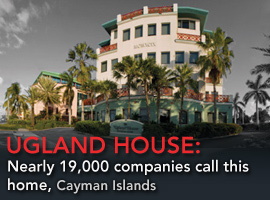
Nearly 19,000 global corporations have a mail drop at Ugland House, a single building in the Cayman Islands. Ugland House is the legal address of these overseas corporate subsidiaries, many set up for the purposes of avoiding taxes.

(pdf version)

KEY POINTS:

You Pay More Money In Taxes Than Many Well-Known U.S. Corporations. The 10 bucks in your pocket is more than many of the largest U.S. corporations paid in U.S. taxes including: Bank of America, Verizon, General Electric, Boeing, and Citigroup. Other companies like Federal Express and ExxonMobil pay effective rates of less than 10 percent (even though the official corporate tax rate is 35%). These same companies pay their CEOs and top managers millions in salary and perks – and spend millions lobbying the U.S. Congress for preferential tax and regulatory treatment.

Corporate Tax Dodging Takes Money Out of the Pockets of the Middle Class and Hurts America. Corporations use tax havens and loopholes to siphon money and jobs offshore – while not paying their fair share of taxes for infrastructure, public services and the investments that have historically built the US middle class, including K-12 and higher education.

We Are Not Broke: Governments Are Cutting Budgets and Jobs When They Should Be Closing Corporate Tax Loopholes. Irresponsible politicians have drained state and federal budgets by giving corporations huge tax breaks and allowing them to dodge taxes through overseas tax havens. Our elected leaders should plug up these corporate tax loopholes before they cry “broke.”

Making Corporate Tax Dodgers Pay Their Fair Share Would Make Cuts to State Budgets Unnecessary. States are facing the worst budget gaps in living memory. The Center on Budget and Policy Priorities estimates that the combined budget gaps in all U.S. states is over $102 billion.1 Meanwhile, closing overseas tax havens would generate an estimated $100 billion! You do the math.

Corporate Tax Dodgers Hurt Domestic U.S. Businesses. Tax havens punish responsible businesses that have to compete unfairly against tax dodgers. A domestic U.S. business that pays its taxes is at an unfair disadvantage with multi-corporations that game the system and shift profits to low or no tax havens. A new coalition has formed called “Business and Investors Against Tax Haven Abuse.”

Tax Havens Cost Us All. When you combine tax avoidance by both wealthy individuals and multinational corporations, tax havens cost the Treasury as much as $123 billion a year. Responsible businesses and individual taxpayers like us pick up the slack to pay for the services all of us use.

Corporate Tax Avoidance Has Dramatically Increased Over The Last Several Decades. In the 1950s, almost a third of federal revenue came from corporate income taxes. By 2009, it had declined to 10 percent.2 Corporations are paying less and middle class individuals are paying more.

The Largest Global Corporations are among the Worst Culprits. Tax avoidance is a global problem. Corporations exploit gaps and loopholes in domestic and international tax law that allow them to shift profits from country to country, often to or via tax havens, with the intention of reducing their taxes. Lack of transparency and reporting allows this tax avoidance to occur on a huge scale.

Secrecy is a Problem! Tax havens are not only ways to reduce or eliminate taxes, but also a means for criminals and lawless corporations to circumvent the law, using secrecy as their primary tool. This is why the Tax Justice Network prefers to refer to tax havens as “secrecy jurisdictions.”

WHAT DO WE WANT?

We support the “Stop Tax Haven Abuse” law that would address a variety of abuses (about to be reintroduced in the 112th Congress). In addition, we support these reforms:

  • Country by country reporting. Require global corporations to report sales made, profits earned and taxes paid in every jurisdiction where an entity operates.
  • Automatic exchange of tax data through international tax cooperation among governments. Require governments to collect data from financial institutions on income, gains, and property paid to non-resident individuals, corporations and trusts. Mandate that data collected automatically be provided to the governments where nonresident entity is located.
  • Require disclosure of beneficial ownership of all business entities, trusts, foundations and charities. Require this information be readily available on public record to facilitate effective due diligence; and explicitly require, and enforce, that financial institutions identify the ultimate beneficial owners or controllers of any company, trust or foundation seeking to open an account.

EXAMPLES OF CORPORATE TAX DODGERS

BANK OF AMERICA: In 2009 and 2010, Bank of America didn’t pay a single penny in federal income taxes, exploiting the tax code so as to avoid paying its fair share. They argue this is because they lost money. But we really don’t know, thanks to over 115 subsidiaries in tax secrecy jurisdictions. There are 59 BoA subsidiaries in the Cayman Islands, 15 in Luxembourg, and 14 in Ireland. Bank of America received $336 billion in government bailout funds (second only to Citigroup).3 When it comes to paying their top managers and influencing elections and government, they don’t hold back. Between 2007 and 2010, during the economic meltdown triggered in part by their reckless actions, Bank of America’s PAC and employees donated $5.184 million to federal campaigns. During these same years, they spent $17.3 million lobbying the federal government.4Bank of America paid their CEO Thomas Montag $29 million in 2009.

BOEING CORPORATION: Over the three year period from 2008 to 2010 had total pre-tax profits of $9.7 billion but did not pay a dime of its profits in federal taxes. Boeing Corporation has 38 subsidiaries in foreign tax haven jurisdictions.5 At the end of February 2011, the U.S. government granted Boeing a contract worth $35 billion to build airplanes. 6

VERIZON: Take out your Verizon phone bill. See the part of the bill where you paid taxes? $2 dollars? Guess what? You paid more taxes on your phone bill than Verizon paid in 2009 and 2010 in federal U.S. corporate taxes. They reported $24.2 billion in pre-tax U.S. income, and yet claimed a federal corporate refund of $1.3 billion. The company has $1.2 billion in unrepatriated foreign assets, money it is keeping offshore in order not to take tax reserves against it.

FEDERAL EXPRESS: Federal Express reported over $1.9 billion in U.S. profits, but paid only $1 million in federal corporate income taxes over the last 2 years, for an effective tax rate of .05 percent. While FedEx only paid $1 million in taxes over 2 years, they spent nearly $42 million lobbying Congress. They have 21 subsidiaries in tax havens including 3 in the Cayman Islands and 3 in Ireland.

GENERAL ELECTRIC: In General Electric, they consider their Accounting Department to be a “profit center,” working to avoid taxes. Between 2006 and 2010, General Electric told their shareholders they had $26.3 billion in profits, but paid no U.S. taxes. In fact, they got $4.2 billion in rebates, so their effective U.S. tax rate was negative 15.8 percent.7 In 2009, General Electric — the world’s largest corporation — filed more than 7,000 tax returns and still paid nothing to U.S. government. In 2010, they reported $5.07 billion in domestic pre-tax profits and paid just $4 million in taxes. Their unpatriated taxes grew to $94 billon. They managed to do this by a tax code that essentially subsidizes companies for losing profits and allows them to set up tax havens overseas. GE has subsidiaries in tax havens including 3 each in Bermuda and Singapore and 1 in Luxembourg. In 2009, GE CEO Jeffery Immelt earned total compensation of $9.89 million. GE spent $39 million lobbying the federal government in 2010 alone, and $83 million since 2008.

OCCIDENTAL PETROLEUM: In 2009, this oil giant paid their CEO Ray Irani $31.4 million, about twice what they paid in federal corporate income taxes, which was $16 million!

CITIGROUP: Citigroup has paid no taxes for the last four years. They were the largest recipient of federal bank bailout funds, receiving $476 billion. Citigroup has a whopping 427 subsidiaries in tax havens including 90 in Cayman Islands, 91 in Luxemburg, 35 in British Virgin Islands, and 40 in Hong Kong. Citigroup has continued to pay its staff lavishly. “John Havens, the head of Citigroup’s investment bank, will probably be the bank’s highest paid executive for the second year in a row, with a compensation package worth $9.5 million.”

EXXON-MOBIL: The oil giant uses offshore subsidiaries and other loopholes to avoid paying taxes in the United States. They have 32 subsidiaries in tax haven countries including 18 in the Bahamas and 3 in the Cayman Islands. Although Exxon-Mobil paid $15 billion in taxes to other governments in 2009, not a penny of those taxes went to the U.S. Treasury. So maybe those other countries should defend ExxonMobil’s assets around the world, instead of the men and women of the U.S. armed forces. Next time the pirates take over your oil tanker, call the Bahamas! ExxonMobil did come up with $68 million to lobby Congress between 2008 and 2010.

WELLS FARGO: Despite being the fourth largest bank in the country, Wells Fargo was able to escape paying federal taxes by writing all of its losses off after its acquisition of Wachovia. Yet in 2009 the chief executive of Wells Fargo also saw his compensation “more than double” as he earned “a salary of $5.6 million paid in cash and stock and stock awards of more than $13 million.”

NEWS CORPORATION:The media giant that owns Fox News avoids taxes through its 152 subsidiaries in tax havens, including 62 in British Virgin Islands, 33 in Cayman Islands, 21 in Hong Kong, and 15 in Mauritius.

PFIZER: Without intellectual property and patent protections, Pfizer’s patents for products like Viagra would be easily replicated and produced for a fraction of the cost. They depend on the US court system to defend their property. Yet Pfizer shelters a lot of this intellectual property offshore, with 80 subsidiaries in tax havens, including 28 in Ireland, 16 in Luxembourg, 10 on the island of Jersey.

RESOURCES ON CORPORATE TAX DODGING

ORGANIZATIONS

Business & Investors Against Tax Haven Abuse
Citizens for Tax Justice
Global Financial Integrity
Global Witness
Institute for Policy Studies
Tax Justice Network
US PIRG
US UNCUT

RESEARCH

Business & Investors Against Tax Haven Abuse: “Unfair Advantage: The Business Case Against Tax Havens,” (July 2010). 

Global Financial Integrity: The Implied Tax Revenue Loss from Trade Mispricing.

Government Accountability Office: Large U.S. Corporations and Federal Contractors with Subsidiaries in Jurisdictions Listed as Tax Havens or Financial Privacy Jurisdictions (December 2008).

US PIRG: Tax Shell Game: What do Tax Dodgers Cost You? (April 2010)

Permanent Subcommittee on Investigations, Staff Report on Tax Haven Banks and U.S. Tax Compliance, July 17, 2008.

A Full Glossary on Secrecy and Tax Avoidance – Searchable

SOURCES AND NOTES

1. Center on Budget and Policy Priorities, Governors’ 2011 Budgets propose New Route of Cuts, January 28, 2011.

2. Six Tests for Corporate Tax Reform, by Chuck Marr and Brian Highsmith, Center and Budget and Policy Priorities, February 28, 2011, http://www.cbpp.org/cms/index.cfm?fa=view&id=3411

3. Final Report of the Congressional Oversight Panel for the Troubled Asset Relief Proram, March 16, 2011, http://cop.senate.gov/reports/library/report-031611-cop.cfm

4. Data compiled by Public Campaign using data found at the nonpartisan Center for Responsive Politics www.opensecrets.org

5. Information about number of tax havens comes from the Government Accountability Office’s report, “International Taxation: Large U.S. Corporations and Federal Contractors with Subsidiaries in Jurisdictions Listed as Tax Havens or Financial Privacy Jurisdictions,” December 2008. GAO-9-157.

6. Citizens for Tax Justice, “Boeing’s Reward for Paying No Federal Taxes Over the Last Three Years? A $35 Billion Federal Contract,” http://www.ctj.org/pdf/boeing0211.pdf

7. Congressional Testimony by Robert McIntyre, March 9, 2011. http://ctj.org/ctjreports/2011/03/ctj_director_robert_mcintyres_testimony_on_business_tax_subsidies.php

Press Release: Teleconference with Sen. Carl Levin, 8/20

Thursday, July 29th, 2010

CONTACT:
Bob Keener, (617) 610-6766, bobkeener@businessforsharedprosperity.org

New Alliance of Business Organizations Presses for Level Playing Field Between U.S. Domestic Business and Tax Haven Abusers
Report Estimates at least $37 billion lost Per Year to Tax Havens

Tele-Press Conference with Senator Carl Levin and Business Leaders:
Tuesday, July 20th, 2:30 ET

Washington, DC, July 20, 2010 — A new report to be released today explores the impact on smaller U.S. businesses when U.S. multinational corporations avoid taxes through overseas tax havens. It also includes a new estimate of the total federal tax revenue that is lost due to use of overseas tax havens: at least $37 billion per year. Previous estimates combined corporate and individual tax sheltering and ranged from $43 billion to $123 billion per year.

The report release coincides with the launch of a petition drive by Business and Investors Against Tax Haven Abuse, to gather signatures from the business community to urge President Obama and Congress to enact legislation that puts an end to tax havens. The petition launches with 400 initial business signers.

The report, Unfair Advantage: The Business Case Against Overseas Tax Havens, shows how when global corporations use tax havens to reduce or eliminate their taxes. It creates an unlevel playing field by shifting the tax responsibilities onto the backs of domestic businesses and individual taxpayers. The report also describes how corporate tax havens support a climate of gaming the system and enable risky investment behavior of the type that led to the recent financial crisis and the worst recession since the Great Depression.

The report may be found online at: http://businessagainsttaxhavens.org/reports.

“As a small business person, I’m incensed that other companies in our country are able to game the system and force the rest of us to take up the slack,” said Debra Ruh, Founder and CEO of TecAccess of Rockville, VA. “When they avoid their normal tax obligations, that puts more of a burden on responsible and sustainable businesses like mine.”

“Small businesses are the lifeblood of local economies. We pay our fair share of taxes, shop locally, support our schools and actually generate most of the new jobs,” said Frank Knapp, President and CEO of the South Carolina Small Business Chamber of Commerce. “So why do we have to subsidize the U.S. multinationals that use offshore tax havens to avoid paying taxes? We need to end tax havens and use that revenue to invest in growing our small businesses. That is how we create a healthy economy.”

“With small businesses still suffering from the recession, $37 billion could pay for programs to help them get back on their feet,” said Scott Klinger, a Co-author of the report and Policy Director for Wealth for the Common Good.  “We can’t afford to continue to let U.S. multinationals avoid their fair share of taxes with overseas tax havens.”

The report lists nine policies that could help level the playing field between small, responsible businesses and global corporations including:

* Block all transfers of intellectual property designed to evade taxes;
* Ban phony offshore corporations that pretend to earn profits offshore when the primary management team remains in the U.S.;
* Repeal the 80/20 Rule that allows corporations to escape U.S. taxation if 80 percent of their business occurs overseas;
* Create disincentives and penalties for U.S. Government contractors using tax havens to avoid U.S. taxes.

WHAT:
The tele-press conference with Sen. Carl Levin (D-MI), will also have a small business owner, Amy Domini of Domini Funds, and the President of a major regional Chamber of Commerce.

CALL IN NUMBER: 1-(760) 569-7676 Code: 818215

WHEN: Tuesday, July 20 at 2:30 PM ET

Business and Investors against Tax Haven Abuse supports policies to end tax avoidance and evasion through offshore tax havens. The petition is cosponsored by Business for Shared Prosperity, Wealth for the Common Good, American Sustainable Business Council and Growth & Justice.